Sir Vivian Richards Stadium, Antigua: Pitch Report, Records & 2026 Guide
By Ahmed Raza | Last updated: August 10, 2026
There are cricket stadiums, and then there are cricket stadiums named after giants. Sir Vivian Richards Stadium — locally known as the North Sound ground — carries the name of arguably the most feared batsman the game has ever produced: Antiguian legend Isaac Vivian Alexander Richards, who at his peak was simply unmatchable.
The stadium was built as a direct replacement for the beloved Antigua Recreation Ground (ARG), a venue that had hosted some of cricket’s most historic moments but had become too small and logistically limited to handle international-scale events. The decision to replace the ARG was far from popular — local fans loved its character — but space limitations restricted development potential, and the need for a modern facility ahead of the 2007 Cricket World Cup made the call unavoidable.
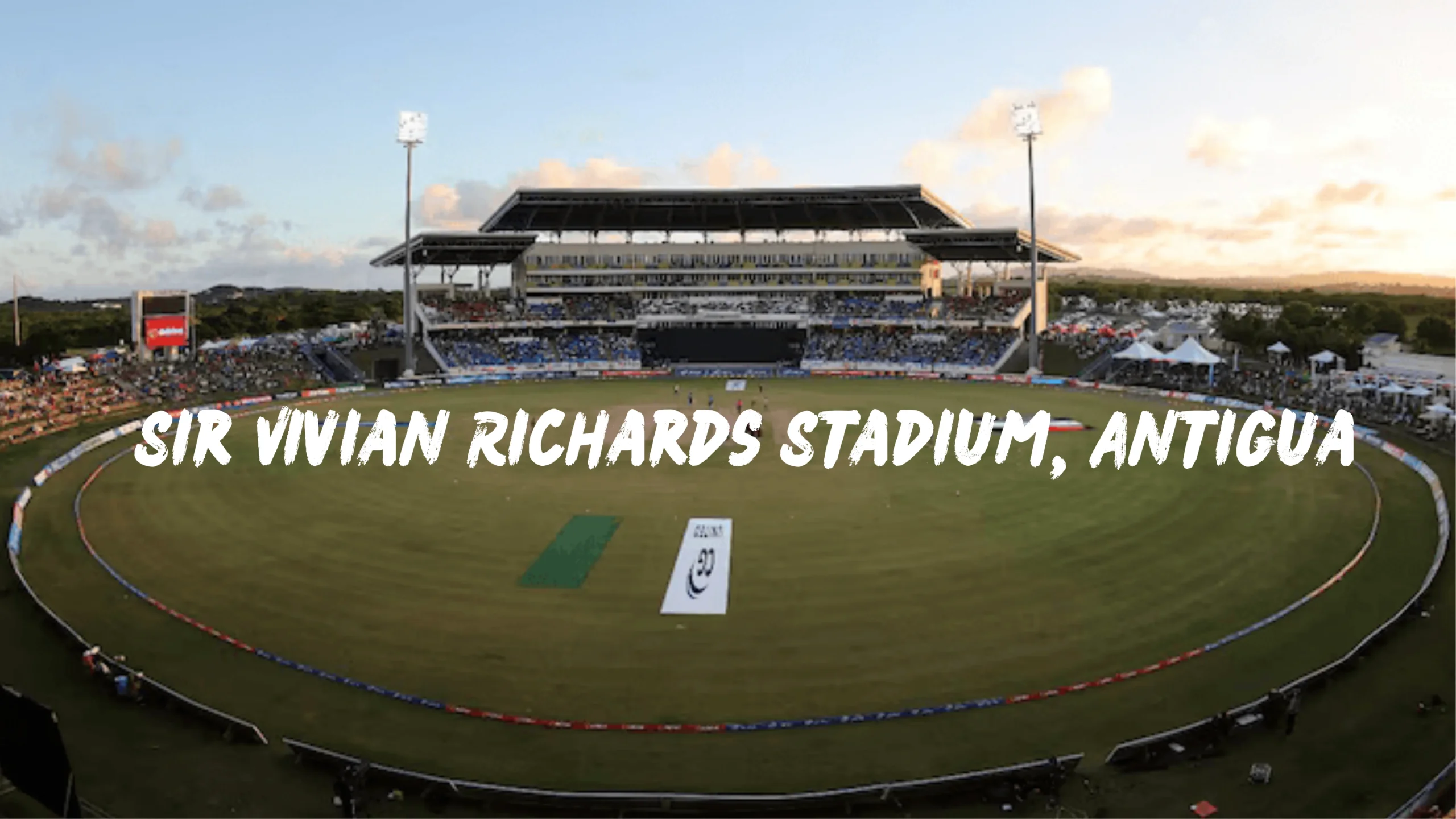
Sir Vivian Richards Stadium is a cricket ground in North Sound, Antigua, with a permanent capacity of 10,000 (expandable to 20,000). Named after West Indian legend Viv Richards, the pitch suits both batters and bowlers. Teams generally prefer to chase due to the dew. It hosts CPL 2026 as the Antigua & Barbuda Falcons’ home ground, with four fixtures scheduled here from August 20–25, 2026.
Quick Facts at a Glance
| Detail | Information |
|---|---|
| Full Name | Sir Vivian Richards Stadium |
| Location | North Sound, Saint George, Antigua and Barbuda |
| Established | 2006 |
| Capacity (permanent) | 10,000 |
| Capacity (temporary) | Up to 20,000 |
| End Names | Andy Roberts End / Curtly Ambrose End |
| First International | ODI vs Australia, March 27–28, 2007 |
| First Test | West Indies vs Australia, May 30–June 3, 2008 |
| First T20I | West Indies vs South Africa, May 19, 2010 |
| Home Team | Antigua & Barbuda Falcons (CPL) |
| Named After | Sir Isaac Vivian Alexander Richards |
| Funded By | Government of China (gift to Antigua) |
Venue Overview & History
There are cricket stadiums, and then there are cricket stadiums named after giants. Sir Vivian Richards Stadium — locally known as the North Sound ground — carries the name of arguably the most feared batsman the game has ever produced: Antiguian legend Isaac Vivian Alexander Richards, who at his peak was simply unmatchable.
The stadium was built as a direct replacement for the beloved Antigua Recreation Ground (ARG), a venue that had hosted some of cricket’s most historic moments but had become too small and logistically limited to handle international-scale events. The decision to replace the ARG was far from popular — local fans loved its character — but space limitations restricted development potential, and the need for a modern facility ahead of the 2007 Cricket World Cup made the call unavoidable.
The stadium was gifted to the Antiguan Government by China ahead of the 2007 World Cup and went on to host Super Eight matches during the tournament, temporarily doubling its capacity to over 20,000 with additional seating.
The venue has had a complicated relationship with its public. The reluctance of the local population to embrace the more remote new ground meant early attendances were poor, and access issues plagued the venue even for small crowds. However, over time — particularly after hosting ICC events including the T20 World Cup in 2024 — the stadium has grown into its identity.
In 2015, the two ends were renamed in honour of two more Antiguian cricket legends: the Andy Roberts End and the Curtly Ambrose End, adding layers of local heritage to a venue that always needed more of it.
Location, Capacity & Stadium Layout
The stadium is situated in North Sound, Saint George, Antigua — approximately 10–20 minutes’ drive from both the capital St. John’s and the country’s international airport, VC Bird International, making it genuinely accessible for touring visitors.
Stadium Structure
- Northern Stand: The main spectator stand, offering open terrace-style viewing
- Southern Stand (Five-Story): Houses the pavilion, corporate suites, media centre, and team facilities
- Eastern and Western Terraces (Burms): Grass banking areas that give the venue its Caribbean casual feel — fans bring picnic gear and the atmosphere, though smaller than the ARG crowd, can still be genuinely loud
- Practice facilities: Full training infrastructure, including practice pitches and underground team passageways
The ground also features extensive parking, which was one of the major shortcomings of the Antigua Recreation Ground and was a driving factor in the new venue’s location decision.
Pitch Report
Understanding the Sir Vivian Richards Stadium pitch is essential for anyone watching, predicting, or writing fantasy cricket for matches played here.
Pitch Character
The Sir Vivian Richards Stadium pitch is a balanced pitch and medium-scoring ground, with assistance for both pace bowlers and spinners. That balance varies considerably depending on the format being played.
Toss Insights (ODI format)
In ODI cricket at this ground, toss winners opt to bowl first approximately 73–74% of the time — a very strong indicator that chasing is the preferred strategy. Teams batting first average approximately 240 runs in the first innings, while teams chasing average slightly lower at around 218–221, but the chase-win percentage is higher.
T20 Pitch Behaviour
In T20 cricket, the pitch favours batters early in the match. The outfield, while historically sandy and controversial, plays true and fast when conditions are right, meaning boundaries come easily. The average T20 strike rate at this venue is around 135.9 in CPL cricket — one of the highest strike rates among CPL venues.
Test Pitch Behaviour
In Test cricket, the surface is considerably more demanding. The average Test strike rate at the venue is just 48.1, indicating a pitch that rewards patience and punishes loose shots. Across eight Test matches at this venue, 7,320 runs have been scored at a SR of 48.1, with 257 wickets taken — suggesting consistent engagement for bowlers throughout the game.
Dew Factor
Dew is a regular evening feature during CPL matches, which at this venue kick off at 7:00 PM local time throughout the 2026 fixtures. As the match progresses into the second innings, dew on the outfield and pitch surface makes bowling harder and gripping the ball more difficult — this is a key advantage for chasing teams in T20 cricket.
Key Pitch Insight
The sandy sub-surface that caused the infamous 2009 Test abandonment was relaid after that incident, but the ground’s relationship with its outfield remains unusual. Even in modern matches, the outfield tends to play slower after rain than comparable Caribbean venues — slightly heavier and more sandy underfoot — which marginally reduces boundary conversion rates compared to, say, Kensington Oval or Queen’s Park Oval. Fantasy cricket players should factor this in when selecting additional fielders or boundary hitters.
Weather Conditions in Antigua
General Climate
Antigua sits in the eastern Caribbean and has a tropical climate. For cricket purposes:
- Dry season: January–June (lower rain risk, better match conditions)
- Wet season / Hurricane season: July–November (higher rain risk — this covers the CPL window)
CPL Month Weather (August)
| Parameter | Typical August Conditions |
|---|---|
| Temperature | 28–31°C |
| Humidity | 70–80% |
| Rain risk | Moderate to significant — 25–60% chance per match day |
| Wind speed | 15–28 km/h (can assist swing bowlers early) |
| Cloud cover | 40–78% typical — often overcast at start |
Conditions during CPL and international T20Is are typically warm and humid, with temperatures around 30°C and a real feel of 35°C, and a 25% or higher chance of precipitation — entirely typical for Caribbean cricket in this window. Fans heading to the four Falcons home fixtures between August 20–25 should check the local forecast on the day itself, since these general seasonal figures can shift quickly with the passage of individual rain bands.
Rain Risk at Major Events
The T20 World Cup 2024 exposed the ground’s rain vulnerability. England’s group-stage match against Namibia at this venue was reduced to an 11-overs-a-side contest after a rain delay of three hours, with the MetOffice recording up to 60% chance of rain during the match window. Fans attending CPL matches in August should plan for potential delays.
Fan Tip: Arrive early and always check the local Antigua weather forecast on the day. The rain bands in the eastern Caribbean move quickly — a clear start can turn into a delay within 30 minutes.
Test Match Records
| Category | Record | Details |
|---|---|---|
| First Test | May 30–June 3, 2008 | West Indies vs Australia |
| Most Recent Test | November 22–25, 2024 | West Indies vs Bangladesh |
| Total Tests | 8 | — |
| Highest Team Total | 566/8 | India vs West Indies |
| Total Runs (all Tests) | 7,320 | SR 48.1 |
| Total Wickets (all Tests) | 257 | — |
Standout Test Moments
The ground’s first Test — West Indies vs Australia in 2008 — set the tone for what the ground could produce. Australia’s Simon Katich and Michael Clarke both struck centuries as the visitors declared on 479/7, before Shivnarine Chanderpaul batted heroically to save the follow-on with an unbeaten hundred in the hosts’ reply. The match was drawn.
Three years after the infamous 2009 abandonment, Test cricket returned with a memorable West Indies innings where Chris Gayle struck 150 — including 21 boundaries — and Kieran Powell scored 134, the pair combining for a 254-run opening stand in response to New Zealand’s 351. The hosts made an impressive 522 before a stunning final-day spell from Kemar Roach (5-60) bowled out the Black Caps for 272.
ODI Records
| Category | Detail |
|---|---|
| First ODI | March 27–28, 2007: West Indies vs Australia |
| Most Recent ODI | December 6, 2023: West Indies vs England |
| Total ODIs | 17+ |
| Total Runs | 7,843 |
| Average Strike Rate | 86.8 |
| Total Wickets | 231 |
| 1st Innings Avg Score | ~240 |
| Toss: Opt to Bowl | ~73–74% of the time |
| Team Batting First Win% | ~43–45% |
The ODI record here clearly favours the chasing side. Teams winning the toss almost invariably bowl first, and the bowling-first success rate reflects well on that instinct.
T20I Records
| Category | Detail |
|---|---|
| First T20I | May 19, 2010: West Indies vs South Africa |
| Most Recent T20I | June 23, 2024: West Indies vs South Africa |
| Total T20Is | Multiple |
| Average Run Rate | High — favours batters |
| Teams Chasing Win% | 5 out of 6 domestic T20 results won by chasers |
T20 World Cup 2024 at This Venue
The stadium stepped into the global spotlight by hosting eight matches of the ICC Men’s T20 World Cup 2024, including Super Eight encounters. This included high-profile clashes like Australia vs Bangladesh and the emotionally charged West Indies vs South Africa Super Eight match — a virtual quarterfinal that drew strong crowds and an electric atmosphere from the local fanbase.
Highest & Lowest Scores
Highest Team Totals
| Format | Score | Teams | Result |
|---|---|---|---|
| Test | 566/8 | India vs West Indies | — |
| ODI | 326/6 (48.5) | West Indies vs England | WI won by 4 runs |
| ODI | 329/5 | England (chasing 329) | ENG won by 5 wkts |
Lowest Team Totals
| Format | Score | Teams |
|---|---|---|
| Test | Low collapses seen | New Zealand 272 (chasing) |
| ODI | 157 (25.5) | West Indies (via DLS) |
Iconic Individual Scores at This Ground
- Chris Gayle: 150 vs New Zealand (Test, 2012)
- Kieran Powell: 134 vs New Zealand (Test, 2012)
- Shivnarine Chanderpaul: Unbeaten century vs Australia (Test, 2008)
- Matthew Hayden: 158 vs West Indies (2007 World Cup, ODI)
Famous Matches & Memorable Moments
The 10-Ball Abandonment — February 2009
No venue history article is complete without this. The second Test between West Indies and England at this ground was abandoned after only ten balls, due to the dangerous condition of the outfield. Ground staff had applied an extra layer of sand after recent flooding, which resulted in bowlers being unable to gain a foothold when running in. The abandonment caused great embarrassment for West Indian cricket, with the ICC suspending the ground from staging all international matches for twelve months and issuing an official warning to the WICB.
The episode gave rise to the stadium’s most enduring nickname: “Antigua’s 366th Beach.” The original reference was already in play before the abandonment — the sandy nature of the outfield had already earned the ground that tag in the build-up to the 2009 game.
The WI vs England ODI Thriller — December 2023
In one of the venue’s most gripping ODIs, West Indies posted 326/6 in 48.5 overs before England chased it down in 47.3 overs for a five-wicket victory. The match showcased the ground at its entertaining best — high-scoring, contested throughout, and decided only in the final few overs.
T20 World Cup 2024 Super Eights
The Super Eight stage brought global attention back to North Sound. The West Indies vs South Africa match — with the host nation needing a win to reach the semi-finals — created one of the most charged atmospheres the modern venue has seen, fully justifying its place on the international cricket map.
CPL 2026 at Sir Vivian Richards Stadium
The Antigua & Barbuda Falcons return to Sir Vivian Richards Stadium in 2026 with arguably their most exciting squad in the franchise’s short history. All four of the Falcons’ home matches in the group stage will be played here, between Thursday, August 20 and Tuesday, August 25 — a six-day stretch of cricket that has become known locally as “the Home of Party Cricket” week, combining top-flight T20 with island festival culture, entertainment and local cuisine around the ground.
CPL 2026 Match Schedule at Sir Vivian Richards Stadium
| Date | Match | Time (Local) | Status |
|---|---|---|---|
| Thu, Aug 20 | Antigua & Barbuda Falcons vs St Kitts & Nevis Patriots | 7:00 PM | Upcoming |
| Sat, Aug 22 | Antigua & Barbuda Falcons vs Trinbago Knight Riders | 7:00 PM | Upcoming |
| Sun, Aug 23 | Antigua & Barbuda Falcons vs Guyana Amazon Warriors | 7:00 PM | Upcoming |
| Tue, Aug 25 | Antigua & Barbuda Falcons vs Barbados Tridents | 7:00 PM | Upcoming |
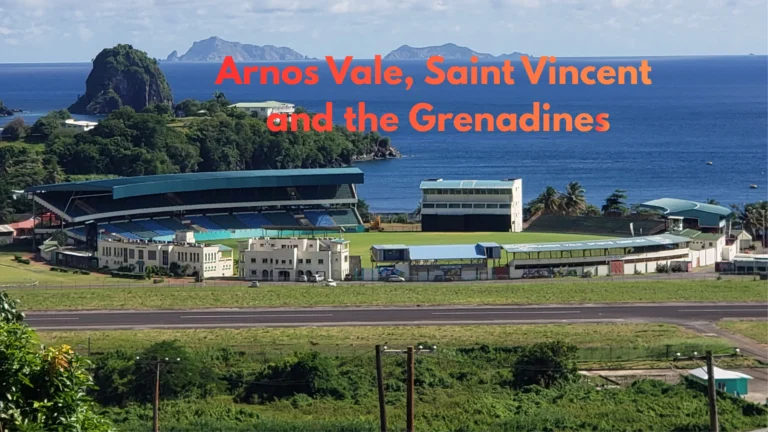
This is the Antigua & Barbuda Falcons’ home stretch during the league phase. CPL 2026 runs from August 7 to September 20, 2026, with 39 total matches across eight venues in seven Caribbean territories, including Arnos Vale Stadium in St Vincent & the Grenadines, which is hosting CPL cricket for the first time this season. The tournament’s knockout stage and final are being staged at Kensington Oval, Barbados.
What to Expect for CPL 2026 Matches Here
- Pitch: Good batting surface early; dew becomes a factor after 7:00 PM local time
- Toss: Expect captains to chase — dew advantage and format norms align
- Weather: August rain risk is moderate; check forecasts on match days
- Local atmosphere: Alzarri Joseph playing for his home island in front of a home crowd will create an electric setting not seen at this venue before
- Ticket booking: Tickets for the North Sound fixtures are available through the official CPL ticketing platform (cplt20.com), as well as RUBIS service stations and the Sir Vivian Richards Stadium box office
Falcons’ Key Home Advantage
The combination of local fast bowlers Alzarri Joseph, Rahkeem Cornwall, and Karima Gore — all Antiguans playing at home — gives the Falcons a psychological edge. Knowledge of the pitch, familiarity with the conditions, and crowd support creates genuine home advantage that CPL squads built on overseas talent sometimes struggle to replicate.
Format Comparison: Pitch Behaviour Across Formats
| Format | Avg 1st Innings Score | SR | Favours | Toss Preference |
|---|---|---|---|---|
| Test | ~280–350 | 48.1 | Patient batters, then bowlers | Bat first (variable) |
| ODI | ~240 | 86.8 | Bowlers first, chasers later | Bowl first (73–74%) |
| T20 (CPL) | ~145–155 | 135.9 | Batters, especially chasers | Chase (dew factor) |
| T20I | ~155–165 | High | Batters | Chase |
Tips for Match Prediction
- Always check the toss in ODIs — the bowling-first preference here (73%+) is statistically decisive
- In T20s, target the second innings captain — dew almost always makes chasing easier after 7 PM in August
- Watch the first three overs — the pitch tends to offer early movement for pace, especially in cooler conditions. If the new ball doesn’t bring wickets, expect a high score
- Back Antiguan local players in fantasy cricket — home conditions familiarity is a real edge, particularly for Alzarri Joseph in CPL matches
- Monitor morning rain in August — if rain falls in the afternoon before an evening match, the outfield plays slower, and boundary scoring dips slightly
FAQs
What is the capacity of Sir Vivian Richards Stadium?
The permanent seating capacity is 10,000, which can be expanded to 20,000 through temporary seating arrangements, as it was during the 2007 Cricket World Cup.
Where is Sir Vivian Richards Stadium located?
The stadium is in North Sound, Saint George, Antigua and Barbuda — about 10–20 minutes from the capital, St. John’s and the country’s international airport.
What are the end names at Sir Vivian Richards Stadium?
The two ends are the Andy Roberts End and the Curtly Ambrose End, renamed in 2015 to honour two more Antiguian cricket legends.
Why was a Test match abandoned here after 10 balls?
In February 2009, the second Test between West Indies and England was called off after just ten balls. Groundstaff had applied an extra layer of sand following recent flooding, making it impossible for bowlers to gain a foothold during their run-ups. The ICC suspended the ground from all internationals for twelve months.
Which team is the home side at Sir Vivian Richards Stadium in CPL 2026?
The Antigua & Barbuda Falcons use Sir Vivian Richards Stadium as their home ground in the 2026 Caribbean Premier League, hosting four fixtures here between August 20 and August 25, 2026, against St Kitts & Nevis Patriots, Trinbago Knight Riders, Guyana Amazon Warriors and Barbados Tridents.
Is it better to bat first or chase at this ground?
In ODI cricket, bowling first is preferred approximately 73–74% of the time, with teams chasing winning more often. In T20 cricket, dew in the evening session makes chasing the dominant strategy as well. In Tests, conditions vary more widely.
How many international matches has the stadium hosted?
The ground has hosted 8 Test matches, 17+ ODIs, and multiple T20Is, in addition to 9 CPL matches and 8 matches during the T20 World Cup 2024.
What was the highest score at Sir Vivian Richards Stadium?
The highest Test total at this ground is 566/8 by India against the West Indies.